Repairing Vintage Jewelry: What Can Be Restored and How to Protect Its Original Character
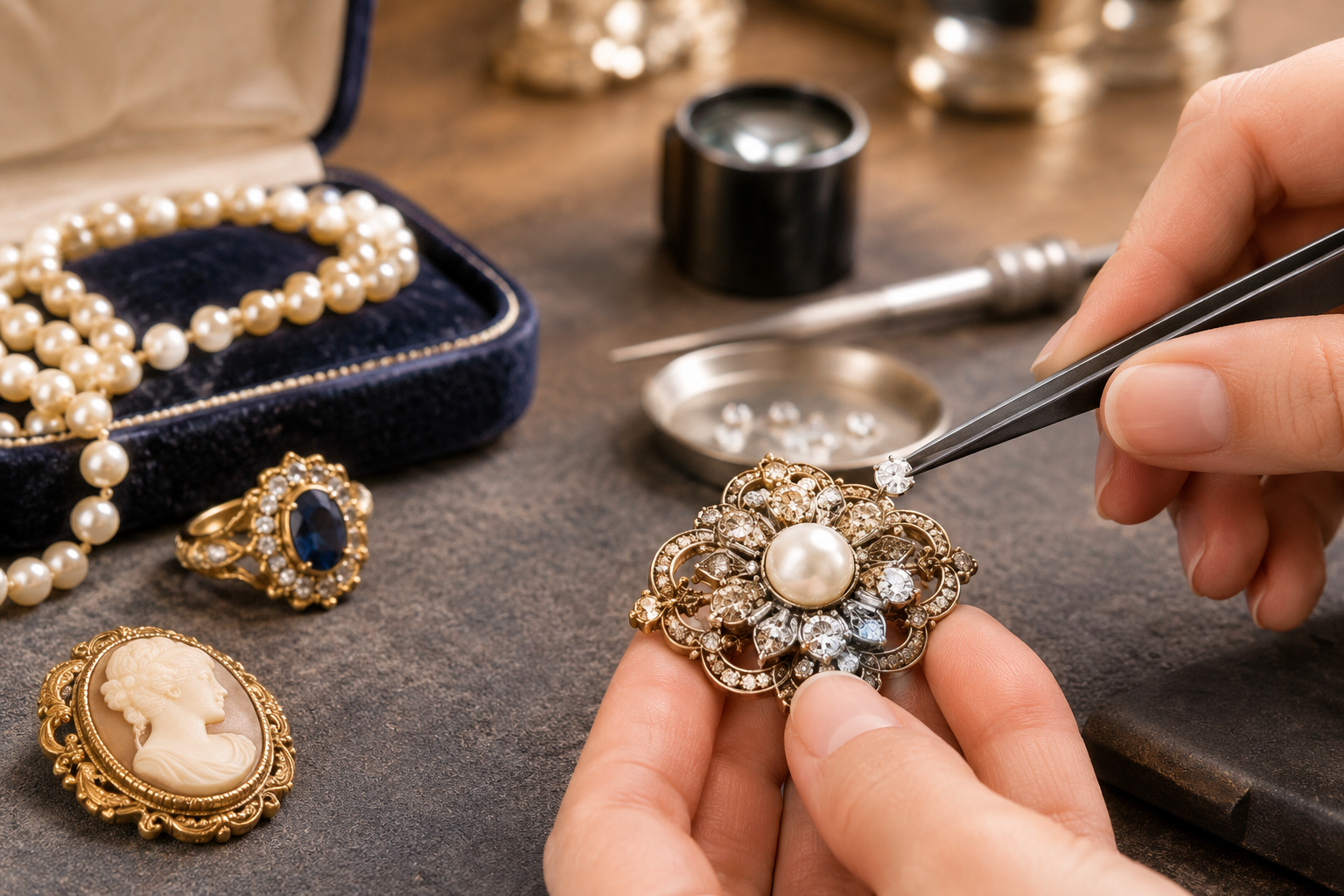
Many antique or estate items come with a loose stone, an old clasp, or a thin band due to years of wear. These types of jewelry often have more value than just the material used, which makes repairing vintage jewelry a decision that deserves careful consideration. A professional restoration will bring back life to the item, but a wrong repair can take away its charm. Knowing what the jeweler is capable of fixing and what needs to remain untouched is key to making the right decision.
What Can Repairing Vintage Jewelry Restore?
The majority of repairs fit into only a few general classes. Stones can be reset, prongs can be retipped, and clasps can be restored. Stretching and broken chains can usually be rebuilt, damaged or bent settings can be repaired. Functional repairs cover the primary concern in making a wearable piece of jewelry.
Cosmetic repair is a much narrower realm. Polishing can take away superficial wear from the item, and repolishing can restore a gold finish where applicable. But intensive polishing takes away metal from engraving or fine carving; and the gold is applied to hide an existing finish instead of renewing the old one. Many good jewelers explain this to a client prior to performing repairs, and may advise leaving certain marks where they belong when there's an intrinsic history. In practice, the greatest success comes through agreement in advance of any tools touching the metal.
Vintage Jewelry Repair Without Losing Original Details
It is usually the characteristics of the original piece which make it valuable, like the hand engraving, milgrain edges, an old-cut diamond, or a maker's hallmark, or even the filigree style itself. Preserving such elements requires a jeweler with knowledge about period techniques and materials. Soldering too close to the delicate filigree will either deform the metal or weaken the surrounding stones, so the work needs to be done with consideration for the piece's construction rather than as any other ordinary work.
If a stone needs to be replaced, the matching of its proportions is just as important as the matching of its color. The modern gemstone might be brighter than the antique one, and the difference can entirely alter the appearance of the piece. There are those who prefer to save the original stone even if it is damaged by chipping because of its structural integrity. Resetting the stone can preserve more of the piece's characteristics than replacement. Having the jeweler photograph your piece before and after the restoration can help you understand the changes made.
When Does Antique Jewelry Restoration Make Sense?
Restoration would be appropriate in the case where the jewelry is sentimental or historically significant, where the construction is intact and where the repair costs are affordable in relation to the value of the piece. The ring with the loose stone in an otherwise intact band would be a good subject for restoration. If the piece were cracked in the shank area or missing part of its structure due to previous attempts at repair, it would likely need much more work done and thus be more expensive.
Condition and rarity of the piece will also play a role. An item that is common but very badly damaged may be suitable for partial repair rather than being fully restored. An item that is rare and documented should receive conservative treatment. Written estimates will allow you to understand what is going to happen and what is not. Properly written estimate will separate needed repairs from extra work on cosmetics.
Estate Jewelry Repair: Common Issues to Check
There are certain issues that estate jewelry tends to exhibit. The prongs will be worn out after some time, and the stones in an old setting might be secured by just a few prongs left. The clasps in vintage necklaces and bracelets will have worn out due to years of use, and some old pieces lack the safety chain. The rings will tend to have thinned out in the back of the shank, and they can break because of the previous resizing.
Previous repairs should also be examined. Mismatched solder, stones that were previously replaced and not fitting in well, and amateur resizing can make a new repair more difficult. Examinations of the piece prior to the repair will allow the jeweler to prepare for the process. The owner should look for hallmarks and makers' marks since they will provide information about the age and metal content of the piece. Previous appraisal documentation will also be helpful.
What to Check | Why It Matters | Questions to Ask |
Prongs and settings | Worn prongs can allow stones to loosen or fall out | Can the prongs be retipped without changing the setting? |
Clasps and safety chains | Weak clasps are a common cause of lost pieces | Is a replacement clasp available that matches the period? |
Shank and band condition | Thin or cracked shanks may not survive resizing | Is the band strong enough to resize again? |
Earlier repairs | Old solder and mismatched parts can complicate new work | Were any previous repairs visible or hidden? |
Original stones and finish | Stones and finishes affect both value and appearance | Can the original stone be reset, or is replacement needed? |
How to Preserve Vintage Jewelry After Repairs?
A repair is just the first step in making sure that the antique piece is well-maintained. It is important how the item will be stored. Antique jewelry items with soft gold, pearls or fragile enamels must be kept separately because they might cause scratches on each other. Chains should be either laid flatly or hung because they should not be tangled inside the drawer. Anti-tarnish pouches are useful for silver items, though they cannot be used with pearls and opals because they may be damaged by some chemicals in cloths.
Cleaning of the antique jewelry must be done carefully as well. Cleaning using mild soap and warm water is usually harmless, but strong chemicals and ultrasonic cleaners can easily ruin antique settings or fragile gems. Getting an annual or bi-annual inspection from your jeweler is a good way to prevent prong wear and other issues in time.
Conclusion
Repairing vintage jewelry is most successful if the idea is to restore a piece while keeping its integrity intact. In terms of structure, most issues can be solved, but when it comes to antique jewelry restoration, one needs to be cautious, as polishing and replating will change the finish of the jewelry. People who have an understanding of what can be done and when restoration is necessary and what features need to be retained are better prepared to make informed choices. The right combination of preserving the original style of a piece along with the skill of a jeweler will lead to durable restoration results.
Frequently Asked Questions
Q1. Will a repaired vintage piece lose its value?
It depends on the type of repair. Structural repairs that keep the original design intact usually have little negative effect on value. Replacing original stones or heavily refinishing the surface can reduce value, especially for collectible pieces, so it is worth discussing those options before work begins.
Q2. How long does a typical repair take?
Simple repairs, such as tightening a prong or replacing a clasp, may take a few days. Larger projects, including rebuilding a chain or resetting several stones, can take several weeks, depending on the jeweler's schedule and whether parts need to be sourced.
Q3. Should I clean a vintage piece before taking it in?
Gentle cleaning with mild soap and warm water is generally safe for most pieces, but harsh chemicals and ultrasonic cleaners can damage fragile stones or older settings. It is usually better to let the jeweler assess the piece first and handle cleaning as part of the repair.
